

This title is also available from
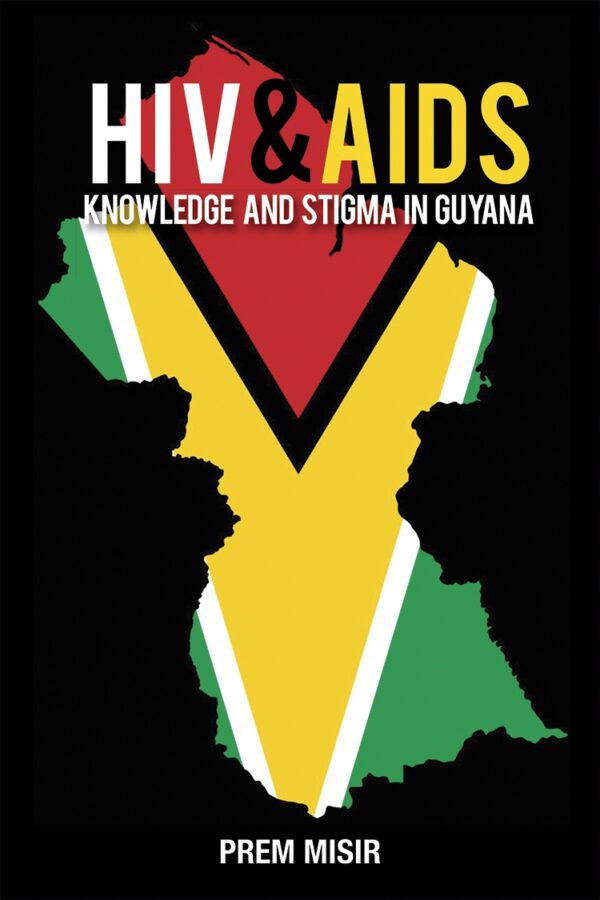
HIV & AIDS Knowledge and Stigma in Guyana
This cross-sectional study used a purposive sample of 379 high school students from fifteen urban and rural high schools in Guyana and assessed their HIV and AIDS knowledge and stigma-related attitudes, and the relationships among gender, age, religion, and race/ethnicity and HIV and AIDS knowledge. Most of the high school students displayed an overall moderate level of HIV and AIDS knowledge. The students understood the modes of HIV transmission; they recognized the symptoms of HIV and AIDS; nearly half of them believed that a blood donor was at risk of contracting HIV; and about one-fifth of the students embraced myths and misconceptions surrounding HIV and AIDS.
There was no statistically significant difference in the knowledge scores of male and female students. Knowledge scores, nevertheless, differed significantly between the 13 to 15 and 16 to 18 age groups, and among the religious and ethnic groups. Stigma-related attitude scores did not differ significantly for gender and age, but differed significantly for religion and ethnicity among students. The study showed fissures in HIV/AIDS knowledge and substantial stigma-related attitudes. Limited understanding of the myths and misconceptions of HIV and AIDS demands a new focus on how HIV is not transmitted through moving beyond conventional strategies toward a social constructivist approach.
This book is essential reading for medical professionals, policymakers and educators throughout the Caribbean region.
- Figures
- Tables
- Foreword
- Preface
- Chapter 1 Introduction
- Response to HIV and AIDS
- Prevalence of HIV in Guyana
- What We Know of HIV and AIDS
- Deficiencies in Research
- Significance of Study
- Purpose of Study
- Research Questions
- Chapter 2 Literature Review
- HIV and AIDS Knowledge and Stigma-related Attitudes/ Perceptions
- HIV and AIDS Knowledge
- Stigma-related Attitudes/Perceptions
- Interventions to Increase Knowledge of HIV and AIDS
- Relationship between HIV and AIDS Knowledge and Stigma-related Attitudes/ Perceptions
- Summary of HIV and AIDS Knowledge and Stigma-related Attitudes/Perceptions
- The Theory of Planned Behaviour (TPB) as an Explanatory Model for Findings in the Literature Review
- Chapter 3 Methodology
- Research Design
- Participants and Procedures
- Instruments
- Intermediary Variables
- Data Collection
- Data Analysis
- Ethical Considerations
- Chapter 4 HIV and AIDS Knowledge
- Descriptive Statistics – Knowledge and Demographics
- Knowledge and Demographics
- Chapter 5 HIV and AIDS Stigma-related Attitudes/ Perceptions
- Stigma-related Attitudes/Perceptions and Demographics
- Chapter 6 Predictors of Knowledge and Stigma-related Attitudes/Perceptions
- HIV and AIDS Knowledge
- The Ten HIV and AIDS Knowledge Items
- HIV and AIDS Stigma-related Attitudes and Perceptions
- The Thirteen HIV and AIDS Stigma-related Attitude/ Perception Items
- Relationship between HIV and AIDS Knowledge and Stigma-related Attitudes/Perceptions
- Chapter 7 Discussion and Implications
- Univariate Findings
- Bivariate Findings
- Multiple Logistic Regression
- HIV and AIDS Knowledge in Guyana
- Religious Groups and HIV and AIDS Knowledge
- HIV and AIDS Stigma-related Attitudes/Perceptions in Guyana
- Multiple Logistic Regression Analysis Implications
- Appendix 1 Gender and HIV and AIDS Knowledge
- Appendix 2 Age and HIV and AIDS Knowledge
- Appendix 3 One-way Analysis of Variance
- Appendix 4 Games-Howell Test
- Appendix 5 Kruskal-Wallis (Ranks): Ethnic Groups and Attitudes/ Perceptions
- Appendix 6 HIV and AIDS Knowledge – Full Model
- Appendix 7 The Ten HIV and AIDS Knowledge Items
- Appendix 8 Stigma-related Attitudes/Perceptions – Full Model
- Appendix 9 The Thirteen HIV and AIDS Stigma-related Attitude/Perception Items
- Appendix 10 Relationship between HIV and AIDS Knowledge and Stigma-related Perceptions
- References
- Recommended Further Reading
- Index
Prem Misir is Pro-Chancellor, University of Guyana. His many publications include Cultural Identity and Creolization in National Unity: The Multiethnic Caribbean and Leader Behavior and the Compliance Structure in Education: A Sociological Study of Ideology and Social Change in Guyana.
Books also of interest
Could It Be the Congos?Pedro L. V. Welch