This title is also available from
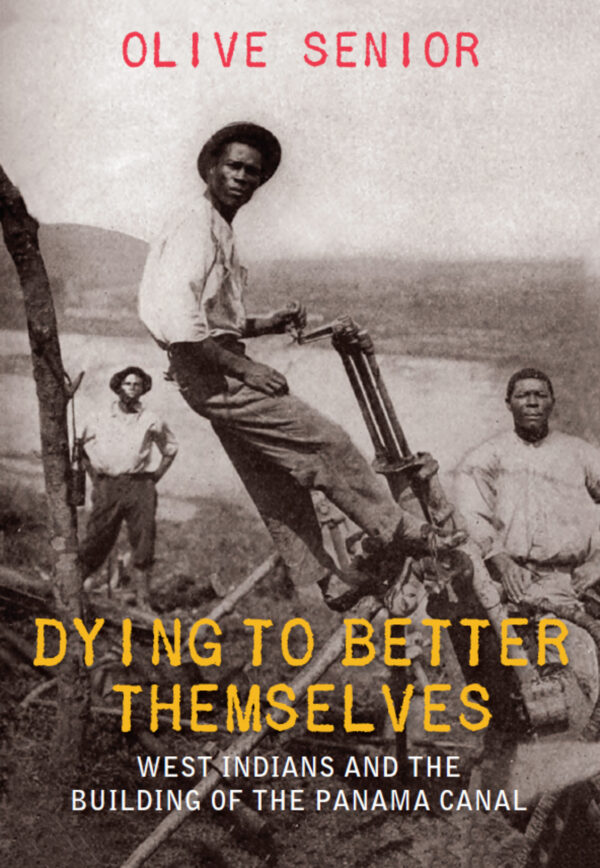
Dying to Better Themselves
West Indians and the Building of the Panama Canal
The popular West Indian migration narrative often starts with the “Windrush Generation”in 1950s’ England, but in Dying to Better Themselves Olive Senior examines an earlier narrative: that of the neglected post-emancipation generation of the 1850s who were lured to Panama by the promise of lucrative work and who initiated a pattern of circular migration that would transform the islands economically, socially and politically well into the twentieth century.
West Indians provided the bulk of the workforce for the construction of the Panama Railroad and the Panama Canal, and between 1850 and 1914 untold numbers sacrificed their lives, limbs and mental faculties to the Panama project. Many West Indians remained as settlers, their descendants now citizens of Panama; many returned home with enough of a nest egg to better themselves; and others launched themselves elsewhere in the Americas as work beckoned.
Senior tells the compelling story of the West Indian rite of passage of “going to Panama” and captures the complexities behind the iconic “Colón Man”. Drawing on official records, contemporary newspapers, journals and books, songs, sayings, and literature, and the words of the participants themselves, Senior answers the questions of who went to Panama, how and why; she describes the work they did there, the conditions under which they lived, and the impact on their homelands when they returned or on the host societies when they stayed.
Many books have shown how the “conquest” of the Isthmus of Panama by land and sea revolutionized the modern world. Dying to Better Themselves distinguishes itself by exploring how the myriad individuals touched by the construction of the railroad and the canal changed their Caribbean world as well.
- List of Illustrations
- List of Tables
- Preface
- Acknowledgements
- Note on Terminology
- To Shrink the World by Half ”
- PART 1 THE PANAMA RAILROAD
- The Panama Railroad, 1849–1855
- PART 2 THE FRENCH CANAL
- The French Canal, 1881–1904
- PART 3 THE US CONSTRUCTION OF THE PANAMA CANAL, 1904—1914
- Who Went, How and Why
- What They Endured, 1904–1907
- The Work They Did There, 1904–1914
- The Lives They Lived, 1904–1914
- How They Loved, Laughed and Prayed
- PART 4 THE POST-CONSTRUCTION YEARS AND THE RETURN HOME
- Life in Panama after Construction Ended
- What They Brought Back Home
- Notes
- Bibliography
- Index
OLIVE SENIOR is a leading Caribbean author, well known for her prize-winning works of fiction (Summer Lightning; Arrival of the Snake-Woman; Discerner of Hearts; Dancing Lessons) and poetry (Talking of Trees; Gardening in the Tropics; Over the Roofs of the World; Shell). Her non-fiction works include The A–Z of Jamaican Heritage, The Encyclopedia of Jamaican Heritage, and Working Miracles: Women’s Lives in the English-Speaking Caribbean. Her many awards include the Commonwealth Writers Prize and the Musgrave Gold Medal of the Institute of Jamaica. Olive Senior lives in Toronto and Jamaica.