This title is also available from
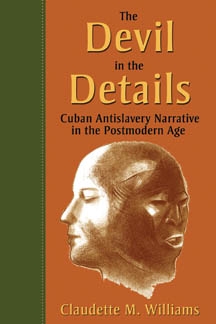
The Devil in the Details
Cuban Antislavery Narrative in the Postmodern Age
This is a book about breathing new life into texts from the past. It demonstrates that meaning in the universe of art is not fixed but volatile, contradictory, unsettled (and sometimes unsettling). As an excellent example of a critical practice which is enabling rather than disabling, The Devil in the Details engages respectfully with previous interpretations of nineteenth-century Cuban antislavery narratives, and suggests other ways of thinking about and understanding them in the light of contemporary (postmodern) ideas.
Studied almost to exhaustion by many non-Cuban scholars since the 1970s, these narratives have been either the cause of Afrocentric disgruntlement or the subject of non-critical readings. Williams’s intervention in the debate has broken out of this polarizing bind, casting the literary expression of antislavery ideology as a spectrum rather than a monolith. With her anti-fundamentalist analysis, the author provides the reader with a balanced understanding of the significance of these narratives.
The alternative readings rest on careful attention to important details of these texts, some of which have been overlooked or given inadequate attention by commentators. Little-known or -studied compositions are also brought out of the shadows and into the critical spotlight, while a new gloss is given to the iconic novels. Of particular value in Williams’s account is the attention to the complexity of the enslaved–enslaver relationship as represented by the writers, as well as the frequently unnoticed subtlety of the strategies they use to subvert the ideology on which slavery was built. Coming on the heels of the 2007 bicentenary of the abolition of the slave trade and the renewed discussions about slavery that it generated, this book is a timely invitation to revisit the literary contribution to the antislavery cause in one colonial Caribbean society.
- Preface
- Acknowledgements
- Introduction
- “Pig-Rearing Peasants Turned Marquises and Counts”: Félix Tanco y Bosmeniel’s Petrona y Rosalía
- “Plumbing the Murky Depths”: Anselmo Suárez y Romero’s Francisco
- Crossed Ideological Lines: Gertrudis Gómez de Avellaneda’s Sab
- Antislavery Narrative with a Costumbrista Twist: Francisco Calcagno’s Romualdo, uno de tantos
- “With All Due Respect”: Postmodern Parody, Drama and Antislavery Politics in Antonio Zambrana’s El negro Francisco
- Enslaving the Enslaver: Tragedy, Irony and Dialogism in Cirilo Villaverde’s Cecilia Valdés
- Conclusion
- Notes
- Bibliography
- Index
Claudette Williams is Professor of Hispanic Caribbean Literature, Department of Modern Languages and Literature, University of the West Indies, Jamaica.
“Highly erudite, cogent and lucid, this book makes a significant contribution to the field of nineteenth-century Cuban literature. . . . This is literary criticism at its finest.”
–Conrad James, Department of Hispanic Studies, University of Birmingham
Books also of interest