This title is also available from
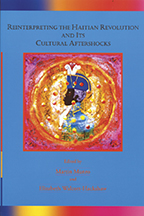
Reinterpreting the Haitian Revolution and Its Cultural Aftershocks
Haiti, its revolution and its culture remain largely unknown or misunderstood in the English-speaking world. This collection of essays seeks to both elucidate aspects of Haitian history and culture and provoke interest in readers and scholars for further research in these fields. Several general guiding questions connect the essays: What were, what are the cultural repercussions of Haiti's revolution, in Haiti and elsewhere? What is the truth of Haiti, its history, its intellectual traditions, its culture? What role has culture played in shaping Haiti's history, and conversely, how has Haiti's history determined, inspired, liberated and restricted Haitian culture and thought? In a land that has constantly relived its past, how can we imagine a Haitian future? Can we rethink history and memory? Can an understanding of post-independence culture and thought point tentatively to a way out of the traps of the past, without effecting a counterproductive forgetting of the revolution? to these questions: the history of Haitian revolutionary universalism; the idea of the Caribbean's historical lack and its application to Haiti; the relationship between personal and political revolutions in Yanick Lahens's fiction; the attempt to write personal history in Edwidge Danticat's work; the role of Haiti and the revolution in forming ideas of race; the importance of the nineteenth-century Haitian intellectual Antenor Firmin in the development of the discipline of anthropology; the influence of St. Domingue refugees in the genesis of New Orleans jazz; the prevalence of the Haytian Fear narrative in nineteenth-century Trinidad; and the many and diverse post-independence representations of Toussaint Louverture. This book will be of interest to students and readers of Haitian literature, history and culture, as well as those interested in broader Caribbean studies, postcolonial studies and African-American studies.
- ACKNOWLEDGEMENTS
- INTRODUCTION Martin Munro and Elizabeth Walcott-Hackshaw
- OPEN LETTER TO THE HAITIANS OF 2004 René Depestre
- HAÏTI CHIMÈRE: REVOLUTIONARY UNIVERSALISM AND ITS CARIBBEAN CONTEXT J. Michael Dash
- PETRIFYING MYTHS: LACK AND EXCESS IN CARIBBEAN AND HAITIAN HISTORIES Martin Munro
- LAHENS’S REVOLUTION, OR THE WORDS WITHIN Elizabeth Walcott-Hackshaw
- EDWIDGE DANTICAT’S THE FARMING OF BONES: TRAUMATIC MEMORIES AND THE TRANSLUCENT NARRATOR Mireille Rosello
- THEORIES OF “RACE” AND THE HAITIAN REVOLUTION Georges Fouron
- ANTÉNOR FIRMIN: HIS LEGACY AND CONTINUING RELEVANCE Carolyn Fluehr-Lobban
- RE-CREOLIZING SWING: ST DOMINGUE REFUGEES IN THE GOVI OF NEW ORLEANS Keith Cartwright
- HAITI AND THE HAITIAN REVOLUTION IN THE POLITICAL DISCOURSE OF NINETEENTH-CENTURY TRINIDAD Bridget Brereton
- THE TRAVELLING REVOLUTIONARY: SITUATING TOUSSAINT LOUVERTURE Charles Forsdick
- WHAT CAN TOUSSAINT LOUVERTURE DO FOR THE HAITIANS OF 2004? René Depestre
- INDEX
- CONTRIBUTORS
Martin Munro
MARTIN MUNRO is Winthrop-King Professor of French and Francophone Studies and Director of the Winthrop-King Institute for Contemporary French and Francophone Studies, Florida State University, Tallahassee, Florida. His publications include Different Drummers: Rhythm and Race in the Americas and Writing on the Fault Line: Haitian Literature and the Earthquake of 2010.
Elizabeth Walcott-Hackshaw
Elizabeth Walcott-Hackshaw is Senior Lecturer in French and Francophone Literatures, Department of Modern Languages and Linguistics, University of the West Indies, St Augustine, Trinidad and Tobago.