This title is also available from
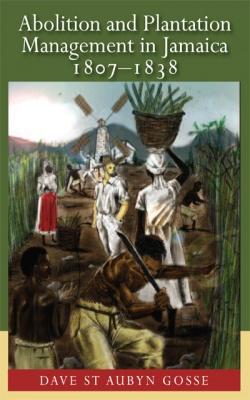
Abolition and Plantation Management in Jamaica, 1807-1838
The British Parliament’s decision to abolish the slave trade in 1807 had disastrous implications for plantation societies, such as Jamaica, in regards to the health and the labour of the enslaved population. Many of the Jamaican sugar planters could not accept the fact that the 1807 Abolition Act was a watershed moment which demanded a more conciliatory form of management and a willingness to implement critical labour reforms, such as task work. The failure to introduce these necessary internal reforms resulted in the continuing decline in the plantations’ crude production figures and in their productivity levels, despite the introduction of steam engines on many estates. The numerical strength of the enslaved population was also decreasing, and most important the health of the enslaved Africans was seriously declining. The planters’ failure to also eliminate their ambiguous management structure further hastened their own demise and the profitability of slavery in Jamaica.
- List of Illustrations
- Acknowledgements
- Introduction
- The Impact of the 1807 Abolition Act
- Ambiguous Management
- Worthy Park: Example of Management for Survival
- The Impact of Abolition on Labour Procurement
- Health and Reproduction
- Management Initiatives
- Epilogue
- Appendix 1: Injustices in the Jamaican Legal System, 1817–1822
- Appendix 2: Injustices in the Jamaican Legal System, 1826–1832
- Appendix 3: Company for Importing Chinese Workers in Jamaica in 1808
- Notes
- Selected Bibliography
- Index
Dave Gosse is Lecturer in History, Department of History and Archaeology, University of the West Indies, Mona, Jamaica. He specializes in the social, economic and political history of nineteenth- and twentieth-century Jamaica.
“Abolition and Plantation Management in Jamaica provides a great deal of new and valuable information on how Jamaican plantations were run in the period between 1807 and 1838. Gosse disagrees with B.W. Higman, [arguing] that the pattern of absenteeism among the Jamaican planter class did not adversely affect the efficiency of the planting business. He also very clearly refutes the scholarship of Michael Craton and James Walvin on Worthy Park, which is another sign of a generally sharper analysis of the evidentiary material. He produces a great deal of data in support of his position. This work can be the basis of vigorous scholarly debate. —Brian L. Moore is John D. and Catherine T. MacArthur Professor of History and Africana and Latin American Studies, Colgate University, Hamilton, New York