
This title is also available from
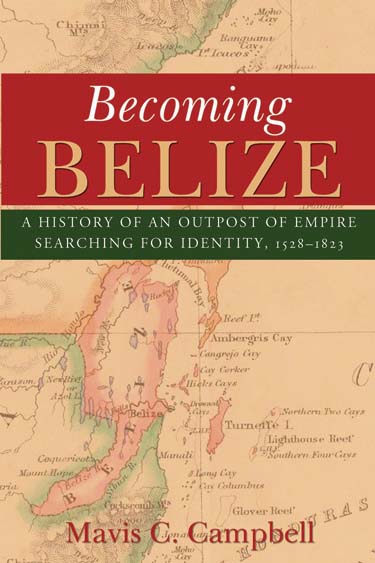
Becoming Belize
A History of an Outpost of Empire Searching for Identity, 1528-1823
Belize, formerly British Honduras, had a different beginning from most other British Caribbean colonies and was not dependent on sugar production but on the exploitation of the forests for timber. Unlike most books on Belize, this study explores in some detail the early Spanish attempts to colonize the area called Belize today and identifies many of the problems Spain encountered.
Campbell persuasively posits that Belizean history can be pushed much further back from the traditional starting point of either the mid-seventeenth or early eighteenth century. The book provides a compelling thesis on the alliance between the British logwood cutters (the Baymen) and the Miskito Indians who together formed the major counterbalance to Spain’s power. The work also explores how social relations under forestry slavery were marked by less outward resistance and violence than that which obtained under the British sugar/slave economies of the region.
- Preface
- Acknowledgements
- Maps
- Part 1 Spanish Belize, 1528–1708: Attempts at Settlement
- Early Belize: Spaniards and Maya in a Bloody Encounter
- Tipu, or Negroman: An “Outpost of Christianity”
- A New Phase of Resistance: Tipu in the Vanguard
- Part 2 British Belize, 1708–1823
- Early British Settlement in Belize to 1763
- “English Lutheran Corsairs” and the Miskito Indians: An Odd Relationship
- Spanish Attacks on Belize to the Treaty of Paris, 1763: Flight to the Mosquito Shore
- Post-Treaty Attacks, Despite Recognition: 1763–1787
- The Mosquito Shore Settlers in Belize: The Establishment of Civil Government
- The Belize Settlement up to the Battle of St George’s Cay
- Aftermath of the Battle of St George’s Cay: Slavery in the Timber Industry
- Epilogue
- Appendix A: Inhabitants of the Bay of Honduras Subscribing to the Articles of Regulations, 1765
- Appendix B: Accounts of Loss Sustained by the British Settlers at the Capture of St Georges Key, 1779
- Notes
- Bibliography
- Index
Mavis C. Campbell is Emerita Professor of History, Amherst College. She is the author of several books and articles, including The Dynamics of Change in a Slave Society: A Sociopolitical History of the Free Coloreds of Jamaica, 1800–1865; The Maroons of Jamaica, 1655–1796: A History of Resistance, Collaboration and Betrayal; Nova Scotia and the Fighting Maroons: A Documentary History; and Back to Africa: George Ross and the Maroons from Nova Scotia to Sierra Leone.
“This work should appeal to scholars in the fields of Central American/Belizean history, Mexican history, Caribbean history, and studies on slavery and slave societies.” —Franklin W. Knight, Leonard and Helen R. Stulman Professor of History, Johns Hopkins University
Books also of interest