This title is also available from
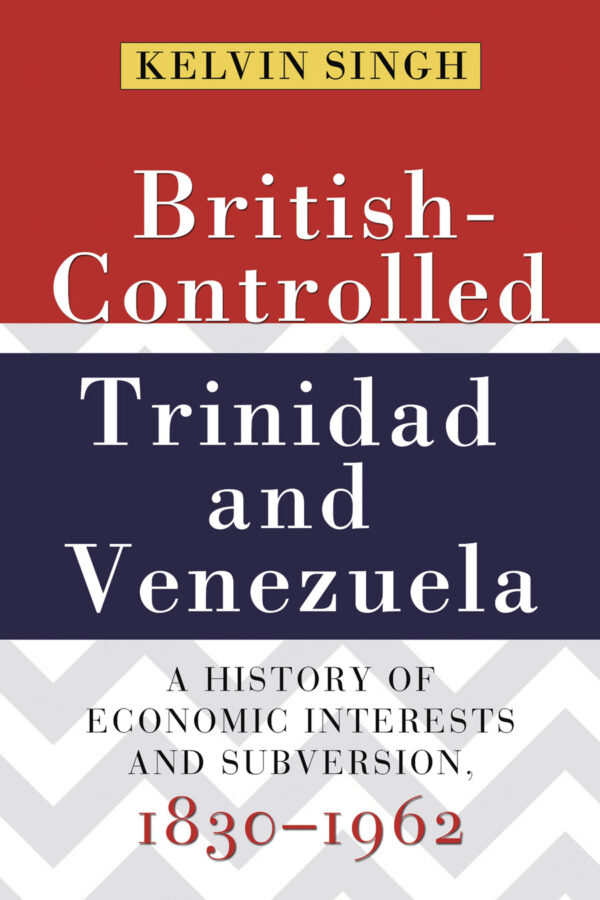
British-Controlled Trinidad and Venezuela
A History of Economic Interests and Subversions, 1830-1962
This unique work assesses the diplomatic, commercial and political consequences of the conflicting interests of the British imperial government and colonial Trinidad on Venezuela. Imperial interests predominated and the British turned a blind eye to the use of Trinidad by opponents of Venezuelan regimes as a base for the overthrow of Venezuelan governments. The island colony played an important role in the politics of destabilization in Venezuela.
The scholarship is based on a variety of primary sources, particularly the British Foreign Office and the Colonial Office as well as Venezuelan and US archives.
- Preface
- Acknowledgements
- The Historical Setting
- Rebels and Refugees
- Surtax, Contraband and Patos Islet
- Asphalt, Revolution and Blockade
- Relations with the Gómez Regime
- Patos, Soldado and Submarine Oil
- Britain, Trinidad and Venezuela in a Changing Geopolitical Environment
- Conclusion
- / 226 Notes
- Selected Bibliography
- Index
Kelvin Singh lectured on the history of the Caribbean, Latin American and US relations with Latin America and the Caribbean and served as Head, Department of History, University of the West Indies, Trinidad and Tobago. He is the author of several essays on Trinidad, the Caribbean and global history in scholarly journals. He is the author of Race and Class Struggles in a Colonial State: Trinidad, 1917–1945 and Bloodstained Tombs: The Muharram Massacre, 1884.
“This work casts more important light on the functioning of British imperialism, in its struggle against US hegemony, with respect to international oil policy, when significant deposits of petroleum were located in Venezuela. It also explains sympathetically the issues of foreign policy for a young nation such as Venezuela, and its remarkable ability to confront imperial powers and to play one off against the other.” – Patrick E. Bryan, Douglas Hall Professor of History, University of the West Indies, Jamaica