This title is also available from
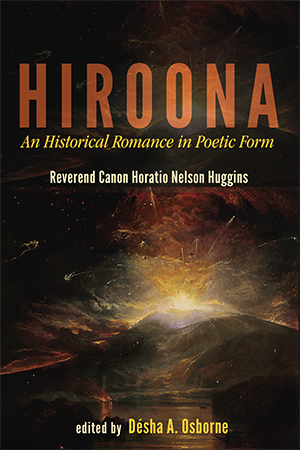
Hiroona
An Historical Romance in Poetic Form
Edited by Désha Amelia Osborne
With over nine thousand lines of rhyming verse, Hiroona: An Historical Romance in Poetic Form tells the fictionalized story of the “Second Carib War” of 1795–97 between Great Britain and the people then known as the Black Caribs with the aid of France. The poem is the vision of St Vincent-born Anglican priest Horatio Nelson Huggins (1830–95), who blends the official history of the war with local legends collected from those who fought on each side to create an exciting narrative with heroic characters and an almost organic critique of the colonial project in the Caribbean. The Caribs, led by chiefs Duvallè, Chetwayè (based on Chief Joseph Chatoyer) and Chetwayè’s son Warramou, fight to expel the British from the island and regain control. Woven into the narrative is the love triangle of Warramou, Carib princess Ranèe and the Scottish soldier Crayton.
Huggins’s work offers a meaningful contribution to the evolution of a unique kind of West Indian consciousness at the end of the nineteenth century. Hiroona has until recently remained relatively unknown, and this edition will be the first available since its posthumous publication in 1930. The text includes a historical essay that places Hiroona in various contexts and considers its significance to Caribbean literature.
- Notes on Editing
- Introduction: Hiroona
- Introduction Hiroona Discovered
- Canto I Early History of St Vincent
- Canto II Mutterings of Coming War
- Canto III French Intrigue and War Begins
- Canto IV A Carib Raid
- Canto V Ranèe
- Canto VI The Caribs Sweep All Before Them
- Canto VII Caribs Repulsed: Chetwayè Falls
- Canto VIII Victory Fluctuates
- Canto IX The War Continues. England’s Star Ascending
- Canto X Events of the War: Ranèe Slain
- Canto XI Hiroona Falls
- Canto XII Hiroona’s Doom
- Appendix Full Text of The Holiday
- Notes
- Selected Bibliography
- Acknowledgements
DÉSHA A. OSBORNE is Adjunct Assistant Professor in English, Queens College, City University of New York.
“The objective of this work is to make available to scholars and students, in a modern annotated edition, a remarkable Caribbean literary work of the late 1800s, hitherto known to and read by only a handful of scholars. . . . [I]t is beyond question an extraordinary work. And it is also beyond question a Caribbean work. . . . Written long before the emergence of ‘West Indian literature’ in the 1930s, it reflects the kind of literary and cultural world which existed in Trinidad and elsewhere in the late nineteenth century, yet it is unique in its ambition, poetic form and length.”