
This title is also available from
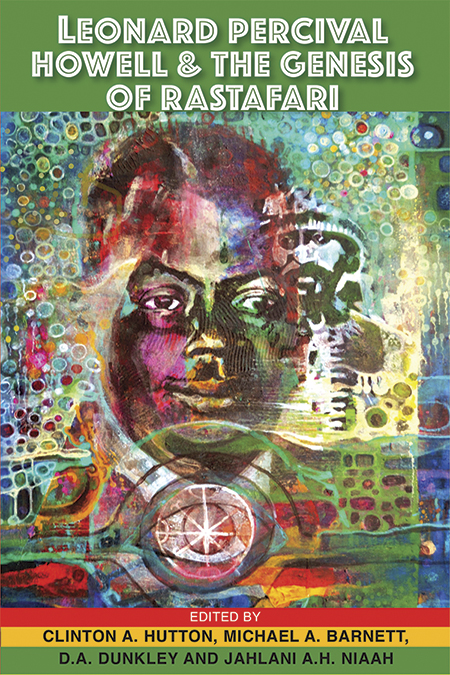
Leonard Percival Howell & the Genesis of Rastafari
This volume is the product of interest in both Howell and the genesis of the Rastafari movement. The volume was conceived and compiled by Rastafari scholars that hail from a range of disciplines at the University of the West Indies, Mona, Jamaica, thus assuring a cross-disciplinary feel for this important contribution to Rastafari scholarship.
- List of Illustrations
- Acknowledgements
- Introduction
- PART 1 ANALYSING LEONARD HOWELL
- Leonard Howell Announcing God: The Conditions That Gave Birth to Rastafari in Jamaica CLINTON A. HUTTON
- Interrogating Leonard Howell as the “First Rasta” MICHAEL A. BARNETT
- “That Vagabond George Stewart of England”: Leonard Howell’s Seditious Sermons, 1933–1941
- 69 JAME S ROBERTSON
- Leonard P. Howell’s Leadership of the Rastafari Movement and His “Missing Years” D.A. DUNKLEY
- Leonard Howell’s Philosophy of Rastafari Manhood JAHLANI A .H. NIAAH
- The Process of Becoming Black: Leonard Howell and the Manifestation of Rastafari CHRISTOPHER A.D. CHARLES
- Reorienting Rasta: Tracing Rastafari’s Visual Roots PETRINE ARCHER Social Entrepreneurship and Rastafari “Livety”: Pinnacle as a Successful Social Enterprise
- K’ADAMAWE A .H.N. K’NIFE, EDWARD DIXON AND ALLAN BERNARD
- Bibliographical Essay: Howell in the Studies on Rastafari LOUIS E.A. MOYSTON
- PART 2 REMEMBERING LEONARD HOWELL
- Growing Up in Pinnacle: An Interview with Monty and Billbert Howell CLINTON A. HUTTON
- Leonard Howell versus Robert William Lyall-Grant MIGUEL LORNE
- Leonard P. Howell: A Portrait LOUI S E.A. MOYSTON
- Epilogue: The Necessity to Never Forsake or Forget Gangunguru Maragh
- I –NATION
- Bibliography
- Contributors
Clinton A. Hutton
CLINTON A. HUTTON is Lecturer in Political Philosophy and Culture, Department of Government, University of the West Indies, Mona, Jamaica.
Michael A. Barnett
MICHAEL A. BARNETT is Senior Lecturer, Department of Sociology, Psychology and Social Work, University of the West Indies, Mona, Jamaica.
D.A Dunkley
D.A. DUNKLEY is Assistant Professor, Department of Black Studies, University of Missouri, United States.
Jahlani A.H Niaah
JAHLANI A.H. NIAAH is Lecturer in Cultural and Rastafari Studies, Institute for Caribbean Studies, University of the West Indies, Mona, Jamaica.
“The contributors to this volume have found the language and concepts by which to interpret Leonard Howell and the origins of the Rastafari movement in the 1930s. This volume is richly documented from the archives, and from interviews, and is informed by multidisciplinary methods, so the reader is treated to an authoritative and comprehensive collection of essays. “Leonard Howell was persecuted over five decades by the British colonial state and by Jamaican governments since independence in 1962. It is in this context that Howell defined the main tenets of the movement, a movement that has now spread globally. All the major themes of his thinking, such as African redemption, the divinity of Haile Selassie, repatriation, and the struggle for freedom and self-reliance are discussed. Howell challenged British colonialism and Jamaican elites in a very different way from the approaches used by the middle-class intelligentsia. He focused, rather, on a new way of seeing God, King and self, thus creating an alternative way of being in the world. Developing Marcus Garvey’s focus on Africa, Leonard Howell and his followers reclaimed their ancestral identity from the dehumanized condition left by British slavery and colonialism. Howell’s communal settlement on ‘Pinnacle’ was an alternative communal space for Rastafari artisans, musicians and peasant farmers.”
Books also of interest