This title is also available from
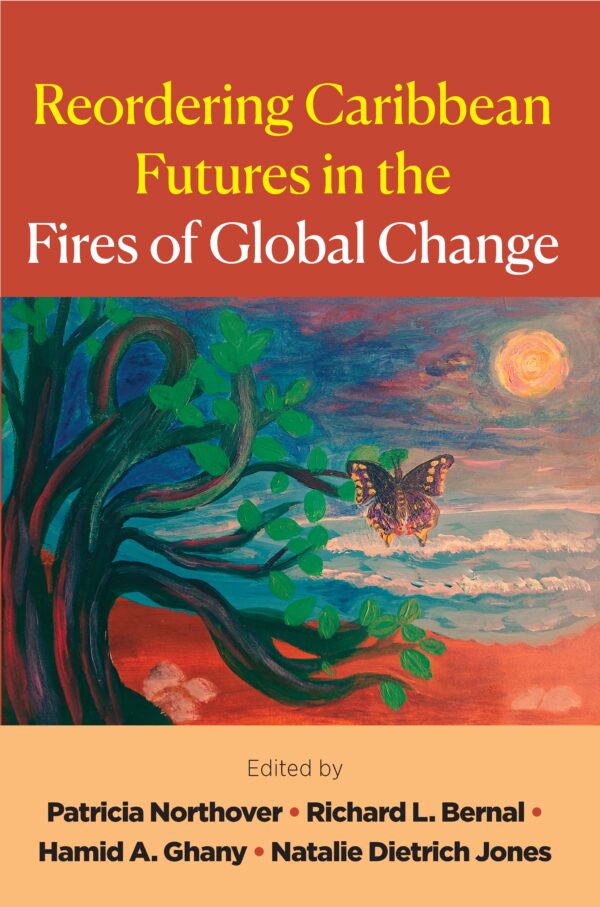
Reordering Caribbean Futures in the Fires of Global Change
The Caribbean region is a complex space characterized by the largest concentration of acutely vulnerable small island states, whose existence has always been deeply entangled with the world. Contemporary crises of climate change and ongoing geopolitical instability as well as the effects of the COVID-19 pandemic, demand new architectures for our world of work, health, education, sociality, wellbeing, economic and environmental governance, as well as for the management of globalization processes.
Framed by this daunting context, Reordering Caribbean Futures in the Fires of Global Change explores the conflicts, tensions and contradictions abounding in order to reimagine Caribbean futures and reorder economic, social, political and environmental practices and policies to address the wellbeing of all. Based on the contributions of an interdisciplinary collection of scholars and policy analysts, this publication assesses the dominant tensions in contemporary international geopolitics and examines the multidimensional fault lines in Caribbean vulnerability. At its core, the work challenges current models and ways of thinking to re-imagine Caribbean development futures.
- List of Figures / viii
- List of Tables / x
- Preface / xi SIR HILARY BECKLES
- Acknowledgements / xiii
- Abbreviations and Acronyms / xvii
- Introduction / 1 PATRICIA NORTHOVER, RICHARD L. BERNAL, HAMID A. GHANY AND NATALIE DIETRICH JONES
- Part 1 Global Power Shifts and Visions of New World Orderings
- 1 The Caribbean in the Escalating US-China Turbulence / 25 RICHARD BERNAL AND DON D. MARSHALL
- 2 Caribbean Futures and the Post-Brexit Deal: Challenges and Opportunities / 50 ALICIA NICHOLLS
- 3 Against Caribbean Vulnerabilities in the Time of COVID-19: Precarious Futures or Visions for Social Justice? / 81 MIMI SHELLER
- Part 2 (Re)Imagining Caribbean Health, Debt and Resilience Dynamics in the Anthropocene
- 4 COVID-19 Health Impact and Resilience Dynamics in the Caribbean / 105 R. CLIVE LANDIS, STANLEY LALTA, ALTHEA LA FOUCADE AND KARL THEODORE
- 5 Debt and Development Finance Models for Caribbean Small States in the Context of Crises / 136 DILLON ALLEYNE AND MACHEL PANTIN
- 6 (Re)Imagining a Climate-Resilient Future: A Caribbean Approach / 163 MICHAEL A. TAYLOR, TANNECIA S. STEPHENSON, FELICIA S. WHYTE, LE-ANNE ROPER, RUTH POTOPSINGH, DONOVAN CAMPBELL, ABRAHAM ANTHONY CHEN, PETER CLARKE, GEORGIANA GORDON-STRACHAN, ORVILLE GREY, TANNICE HALL, RANDY KOON KOON, INDI MCLYMONT-LAFAYETTE, ELECIA MYERS, HEATHER PINNOCK, ALLISON RANGOLAN, DALE RANKINE, GREGORY ROBIN, IANTHE SMITH, ROSE-ANN SMITH, NEKEISHA SPENCER, KIMBERLY STEPHENSON AND JEREMY TAYLOR
- Part 3 Dis/integration Movements in the Caribbean – Predicate for a Regional Reset?
- 7 How the Eric Williams/Arthur Lewis Divergence Soured the Regional Integration Movement / 203 HAMID GHANY
- 8 Dutch Disease in a Small Petroleum-exporting Country: Evidence from Trinidad and Tobago / 226 ROGER HOSEIN, REGAN DEONANAN AND CARLTON THOMAS
- 9 Policy Shifts and Analytics in the Caribbean Setting: Stress Testing Growth Models and the Liberal Order in the COVID-19 Reset / 250 WINSTON DOOKERAN AND PREEYA S. MOHAN
- Part 4 People on the Move – Mobility Justice for Changing Worlds
- 10 ‘I Thought No One Would Care’: Identity, (Mis)Recognition, and the Windrush Scandal / 269 BRIAN WALKER
- 11 The Canada-Caribbean Seasonal Agricultural Worker Program (SAWP) in and Beyond COVID-19: Involuntary Mobilities, Liberalized Food Systems and Multiple Inequities / 293 KRISTIN LOZANSKI, TALIA ESNARD AND TOMASO FERRANDO
- 12 Hauntings of Islands’ Sovereignties: An Examination of the Responses by Curaçao and Trinidad and Tobago to the Venezuelan Migration Crisis / 316 NATALIE DIETRICH JONES AND SHIVA S. MOHAN
- 13 Implications of Environmental Change for Migration and Sustainable Futures of Caribbean States / 340 ELIZABETH THOMAS-HOPE
- Appendices
- Appendix 1: Embassies of China and the United States and Overseas Offices of Taiwan in the Caribbean and Central America (September 2020) / 367
- Appendix 2: Table 4.8: Select macro-economic and fiscal indicators in Caribbean countries, 2020–2022 / 368
- Appendix 3: Details on chosen variables / 369
- Contributors / 370
- Index / 377
Patricia Northover
Patricia Northover, PhD, is a development economist and Senior Research Fellow at the Sir Arthur Lewis Institute of Social and Economic Studies, The University of the West Indies, Mona (SALISES, UWI). She specializes in the philosophy of economics and critical development studies.
Richard L. Bernal
Richard L. Bernal, PhD, former Ambassador to the USA and Organization of American States and Professor of Practice at the Sir Arthur Lewis Institute of Social and Economic Studies, as well as former Pro Vice-Chancellor, Global Affairs at The University of the West Indies.
Hamid A. Ghany
Hamid A. Ghany is Professor of Constitutional Affairs and Parliamentary Studies and former SALISES Director, The University of the West Indies, St Augustine.
Natalie Dietrich Jones
Natalie Dietrich Jones is Senior Research Fellow at the Sir Arthur Lewis Institute of Social and Economic Studies, The University of the West Indies, Mona. Her research interests include geographies of the border, managed migration, and intra-regional migration in the Caribbean.
Books also of interest