This title is also available from
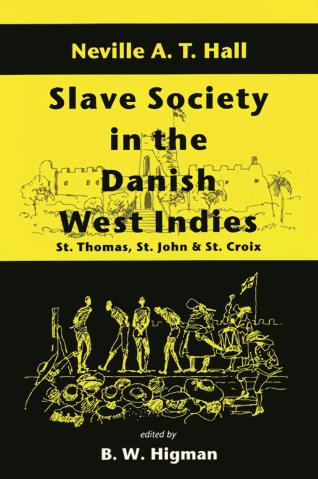
Slave Society in the Danish West Indies
St. Thomas, St. John and St. Croix
Slave Society in the Danish West Indies provides a rich account of the development and destruction of slavery in St. Thomas, St. John and St. Croix, the Caribbean islands which today comprise the United States Virgin Islands. It sees slavery as fundamental to the entire fabric of colonial society and pays particular attention to the political and social life of the whites and freedmen in interaction with the slaves.
The Danish West Indian colonies contained a small but significant part of the slave population of the Caribbean. Each of the islands had a distinct history during the period of slavery: St. Croix was the scene of a full-blown sugar plantation economy; St. Thomas served as a major entrepot, with a small plantation sector and a large role in the transatlantic slave trade; St. John developed as a plantation economy but for various reasons the slaves came to engage in relatively independent economic activity.
Resistance to slavery was persistent, with important rebellions occuring in St. John and St. Croix. Although Denmark was the first European nation to abolish the slave trade, emancipation did not come until 1848, so that the gap between abolition and emancipation was longer than in most territories. The Danish West Indies also saw unique attempts at the amelioration of the slave system, such as the establishment of schools for slaves. Thus the study of slave society in the Danish West Indies has much to tell about the nature of Caribbean history generally.
Based on extensive research in the Copenhagen archives, Slave Society in the Danish West Indies makes a truly original contribution to the understanding of slave societies throughout the Americas.
- List of Tables ix
- List of Figures xi
- Abbreviations xiii
- Glossary xv
- Foreword, by Kamau Brathwaite xvii
- Editor's Preface xix
- List of Publications of Neville A.T. Hall xxiii
- 1 Empire Without Dominion: The Danish West Indies, 1671-1848 1
- Early Colonization of St. Thomas 6
- Dutch Cultural and Commercial Hegemony in St. Thomas
- and St. John 9
- Danish Settlement and English Influences in St. Croix 11
- Language, Amelioration and National Identity 2 7
- The Economics of Foreign Domination 19
- Foreign Domination and Internal Security 23
- Slaves and Internal Security 2 7
- Deepened Difficulties and Challenges in the
- Nineteenth Century 30
- 2 "The Doom of the Almighty:" Slaveowning Ideology 34
- The Sanctions of Ancient Law 34
- Martial Models 36
- Economic Expediency 38
- The Curse of Ham 41
- The Civilizing Mission 44
- Sin and Salvation 45
- Racial Arguments 47
- The Emergence of Anti-Slavery Ideology 50
- 3 "Part and Parcel of Property:" Slaves and the Law
- in the Eighteenth Century 56
- Gardelin's Code of 1733 56
- Frederik V's Reglement of 1755 59
- Subsequent Concessions 62
- Lindemann' s Draft of 1783 65
- Abolition, Amelioration and the Law 67
- 4 The Rural Milieu: Slavery on the Plantations 70
- Roots 70
- Plantation Labor 72
- Housing 76
- Food and Clothing 79
- The World the Slaves Made 80
- Family, Kinship and Demographic Survival 83
- 5 The Urban Milieu: Slavery in Christiansted,
- Frederiksted and Charlotte Amalie 87
- Domestics, Hucksters, Artisans 88
- Conditions of Life 93
- Urban-Rural Interaction 95
- Communal Interaction 97
- Social Control 100
- Crime and Punishment 102
- 6 An Oasis of Humanity: Independent Slave Activity 110
- God 111
- Mammon 114
- Dances and Other Diversions 115
- Cultural Creation 122
- 7 Maritime Maroons: Grand Marronage 124
- Early Patterns 126
- Legislation and Diplomacy 125
- New Routes to Freedom 130
- Strategies 136
- 8 "An Intermediate Sort of Class:" The Emergence
- and Growth of the Freedman Population 139
- Manumission 139
- Accumulation of Wealth 141
- Population Size and Growth 145
- Restrictive Legislation 145
- Gender and Demographic Concerns 149
- Social Control 154
- 9 'The Rights and Privileges of Rational Creatures:"
- The Freedman Petition of 1816 157
- White Attitudes 158
- Interaction with Slaves 161
- Internal Differentiation 163
- Challenging Inequality 165
- The Petition of 1816 269
- After 1816 174
- 10 Strangers Within the Gate: £migr£ Freedmen
- in the Nineteenth Century 178
- Origins 178
- White Fears 181
- Emigres and the Freedman Community 184
- The Census of 1831 187
- 11 "Religion and Enlightenment/' Education, Amelioration
- and the Road to Abolition 192
- Early Attempts at Slave Education 292
- Effects of Metropolitan Humanitarianism 295
- Von Scholten's Initiatives 297
- Metropolitan and Local Opposition 200
- The 1846 Ordinance 205
- 12 The Victor Vanquished: Emancipation and Its Aftermath 208
- The Court Martial 222
- The Trial Evidence: Prolegomenon to Revolt 223
- Violence Manque 2-3 July 1848 218
- Attitudes to the Future: Race and Class 220
- Property Destruction: 4-5 July 1848 224
- Women 225
- Differential Responses 226
- Epilogue 227
- Notes 229
- Bibliography 265
- Index 277
B.W. Higman is Emeritus Professor of History, University of the West Indies, and Emeritus Professor of History, Australian National University. He is the author of eleven books on Caribbean history, archaeology and geography, including the award-winning publications Slave Population and Economy in Jamaica, 1807–1834; Slave Populations of the British Caribbean, 1807–1834; Jamaica Surveyed: Plantation Maps and Plans of the Eighteenth and Nineteenth Centuries; Montpelier, Jamaica: A Plantation Community in Slavery and Freedom, 1739–1912; Writing West Indian Histories; Plantation Jamaica, 1750–1850: Capital and Control in a Colonial Economy; and Jamaican Food: History, Biology, Culture. His most recent books are A Concise History of the Caribbean and How Food Made History.