
This title is also available from
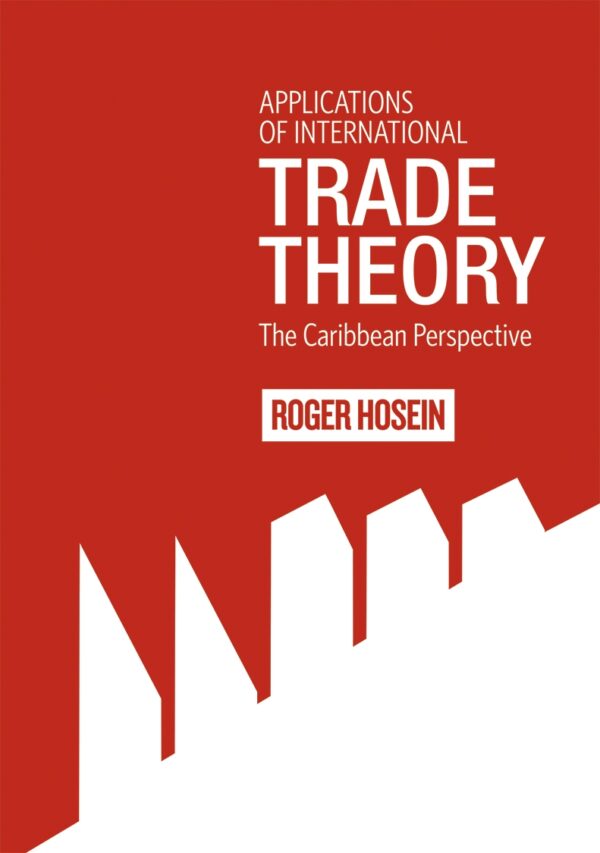
Applications of International Trade Theory
The Caribbean Perspective
Applications of International Trade Theory: The Caribbean Perspective is an applied research-related book essential for undergraduate and postgraduate students, policymakers, and practitioners in the trade and development field. The book is relevant to a range of modules that emphasize the economic environment and perspectives needed to understand Caribbean trading patterns. It provides a holistic and balanced treatment of various approaches within the international trade domain as well as clarity of exposition to guarantee that all readers acquire an ample grasp of the theories, application and policies discussed.
Much of the content begins at an introductory level and is suited to readers with little or no previous exposure to the economics surrounding international trade, although the diverse nature of the topics covered inevitably means there is some variation in the level of analysis. Hosein makes use of numerous theoretical constructs with the intention of familiarizing readers with some of the core concepts that underpin the complexities surrounding any study on international trade.
Although the topics have been arranged with an element of progression, so that the chapters may be read consecutively, the largely self-contained nature of each chapter gives the book a degree of flexibility: chapters can be read selectively, in any order appropriate to the reader’s interest or to the stage reached in a programme study.
- List of Figures
- List of Tables
- Acknowledgements 1. International Trade: Theory and Application
- 1.0 An Overview of the Global Economy
- 1.1 World Trade by Region
- 1.2 What Is Globalization?
- 1.3 China’s Increasing Trade Openness and the Implications for World Trade
- 1.4 Conclusion 2. The Pure Theory of International Trade: Supply
- 2.0 Introduction
- 2.1 The Mercantilist View
- 2.2 Absolute Advantage
- 2.3 Comparative Advantage
- 2.4 Comparative Advantage and the Developing Countries
- 2.5 An Enquiry into the Revealed Comparative Advantage of Trinidad and Tobago
- 2.6 Conclusion
- Appendix 2.1: Measuring Revealed Comparative Advantage (RCA) 3. Terms of Trade
- 3.0 Introduction
- 3.1 Net Barter Terms of Trade
- 3.2 Trends in the Terms of Trade of Trinidad and Tobago
- 3.3 Income Terms of Trade
- 3.4 Comparing the Income Terms of Trade (YTT) and the Net Barter Terms of Trade (NBTT)
- 3.5 Comparing the Terms of Trade of CARICOM Countries
- 3.6 Illustration of the Two Factor Terms of Trade: Single and Double Factoral
- 3.7 The Transfer Problem and the Terms of Trade
- 3.8 Conclusion 4. Gains from Trade in Neoclassical Theory
- 4.0 The Concept of Opportunity Cost
- 4.1 Indifference Curves
- 4.2 Budget Line
- 4.3 Consumer Equilibrium
- 4.4 The Price Consumption Curve and the Demand Curve
- 4.5 Factor Intensity of a Production Process
- 4.6 General Equilibrium in a Closed Economy (Autarky)
- 4.7 Gains from Trade
- 4.8 Decomposing the Gains from Trade
- 4.9 Specialization and Export Concentration in Trinidad and Tobago
- 4.10 Foreign Countries and Gains from Trade
- 4.11 Conclusion 5. Offer Curves
- 5.0 Introduction
- 5.1 Offer Curves and the Equilibrium Terms of Trade
- 5.2 Factors Influencing a Shift of the Offer Curve
- 5.3 Conclusion 6. A Basis for Trade: The Factor Proportion Hypothesis
- 6.0 Introduction
- 6.1 The Heckscher-Ohlin Theorem: Two Countries, Two Factors, Two Commodities
- 6.2 The Heckscher-Ohlin (H/O) Theorem: Factor Proportions Are Key to Trade Patterns
- 6.3 The Factor Price Equalization Theorem
- 6.4 Intra-CARICOM Single Market and Economy (CSME) Nurses’ Salaries and the Factor Price Equalization
- 6.5 The Stolpher-Samuelson Theorem
- 6.6 Growth and Changing Factor Endowments in Trinidad and Tobago
- 6.7 Empirical Evidence on the Classical Model
- 6.8 Tests of the Heckscher-Ohlin (H/O) Model
- 6.9 Reconciling the Leontief Paradox
- 6.10 Conclusion 7. Alternative Theories of Trade and Intra-Industry Trade
- 7.0 Introduction
- 7.1 Imitation Gap Theories of Trade
- 7.2 Product Cycle Hypothesis
- 7.3 Increasing Returns, Imperfect Competition and International Trade
- 7.4 Engel Effects
- 7.5 Linder’s Representative Demand Hypothesis
- 7.6 Intra-Industry Trade
- 7.7 Marginal Intra-Industry Trade
- 7.8 Conclusion 8. Economic Growth and International Trade
- 8.0 Introduction
- 8.1 The Pre-growth Scenario
- 8.2 The Production Effects of Growth
- 8.3 Labour Growth and Capital Accumulation over Time
- 8.4 Technical Progress, Trade and Welfare
- 8.5 The Dutch Disease
- 8.6 The Dutch Disease and Deindustrialization
- 8.7 Empirical Investigation of the Dutch Disease and Deindustrialization in the Trinidad and Tobago Economy
- 8.8 Immiserizing Growth
- 8.9 The Rybczynski Theorem: Growth of Production Alone
- 8.10 Conclusion 9. International Factor Flows: Foreign Direct Investment
- 9.0 Introduction
- 9.1 The Significance of FDI Flows
- 9.2 Welfare Effect of International Capital Flows
- 9.3 Determinants of FDI Flows
- 9.4 FDI and Economic Growth
- 9.5 FDI Flows in Other CARICOM States
- 9.6 Does FDI Lead to Economic Growth?
- 9.7 FDI and Wage Inequality in Developing Countries
- 9.8 Wage Inequality in Trinidad and Tobago
- 9.9 Conclusion 10. International Flows of Factors of Production: Labour
- 10.0 Introduction
- 10.1 Labour Movement between Countries
- 10.2 Motives for International Labour Migration: Reflections on the Migration of Nurses from CARICOM
- 10.3 Persistence of Push/Pull Factors into the Medium and Long Term
- 10.4 Foreign Population Characteristics in Developed Countries
- 10.5 World Remittance Flows
- 10.6 Conclusion 11. Tariffs
- 11.0 Some Introductory Definitions
- 11.1 Economic Effects of a Tariff
- 11.2 The Specific Tariff in the Small-Country Case
- 11.3 The Welfare Effects of Tariffs
- 11.4 General Equilibrium Effects of a Tariff in a Small Economy
- 11.5 The Prisoner’s Dilemma and International Trade
- 11.6 Arguments for Tariffs and Their Theoretical Validity
- 11.7 Effective Tariffs
- 11.8 A Large Country and Tariffs That Improve Its Terms of Trade
- 11.9 Tariffs That Reduce Welfare
- 11.10 Tariffs That Improve Welfare
- 11.11 Tariffs and Tariff Retaliation
- 11.12 The Optimal Tariff
- 11.13 Conclusion
- Appendix 11.1: CARICOM and the Common External Tariff
- Appendix 11.2: CARIFORUM–EC Economic Partnership Agreement
- Appendix 11.3: Economic Effects of Dumping
- Appendix 11.4: General Equilibrium Illustration of the Infant Industry Argument 12. Other Non-Tariff Instruments of Trade Policy
- 12.0 Introduction
- 12.1 Import Subsidies
- 12.2 Export Subsidies
- 12.3 Export Tax in a Small Country
- 12.4 Economic Effect of a Quota
- 12.5 The Effect of a Quota on the Terms of Trade of a Large Country
- 12.6 Voluntary Export Restraint (VER) and the Terms of Trade
- 12.7 Lerner Symmetry Theorem
- 12.8 Conclusion
- Notes
- References
- Answer Key
- Index
Roger Hosein is Senior Lecturer, Department of Economics, University of the West Indies, St Augustine, Trinidad and Tobago. He specializes in international trade with particular emphasis on the dynamics associated with trade patterns within the Caribbean.
Books also of interest